

Behind the Essay: Anahid Nersessian
On divorce and writing ambivalence


In December of last year, we asked Anahid Nersessian, the writer and critic, to review a group of recent books about divorce. What emerged instead, over several drafts and many months, was an account of the end of her own marriage, and an unrelenting inquiry into the ethical and formal problems involved in writing about a relationship’s demise. Nersessian’s essay, modeled after “Forty-One False Starts,” a 1994 essay by Janet Malcolm, resists narrative closure in favor of a sustained ambivalence. Each numbered start is both beginning and end. We spoke with her about how the essay took shape, what Malcolm’s example made possible for her, and why divorce poses a particular challenge—and temptation—for writers.
—The Editors
The Yale Review: In the piece, you acknowledge that you “did not set out to write an essay on divorce,” and in fact, the essay began as an assignment from TYR to write about some recent books on divorce, which you found lacking. Could you talk a bit about the process of writing this piece? Would you say that noticing what those books failed to do made space for what you wanted to attempt? What did you want this essay to do differently?
Anahid Nersessian: I don’t know if I found the books I was asked to review lacking, exactly. Many struck me as overfull. A hypothesis I was working with in an earlier version of the piece was, now that most states in the U.S. have no-fault divorce—meaning that neither party is penalized or rewarded if they’ve cheated or not cheated, been a selfish partner or a self-sacrificing one, and so on—the divorce novel and the divorce memoir become places where the writer can adjudicate on the page what goes unheard in court. She can vilify her ex or justify her own behavior, she can expose intimate evidence, she can insist upon her own virtue, she can lay it all out for the reader to judge.
The divorce book, then, is a forensic genre, but it’s not an objective one. You’re only hearing one side of the story. In that sense, it offers a very poor postmortem of a marriage. Romantic relationships are some of the most uncertain, fragmentary, even hallucinatory experiences we have. They rely on a fiction of mutual understanding and transparency, but like all fictions they require a suspension of disbelief. To stand on the other side of a marriage, at its end, and say “I know this is what happened” is either disingenuous or delusional. Nobody knows what happened.
What I’ve tried to do in this essay is capture the scattered and sketchy nature of divorce. Marriages end, but there are some forms of relation—like co-parenting—that continue. What do those forms look like, and how do they resist a conventional narrative?
Your essay is “after Janet Malcolm.” Can you tell us about how you drew on Malcolm’s work?
Janet Malcolm’s essay “Forty-One False Starts” was published in The New Yorker in 1994. It’s a profile of the artist David Salle, who became very famous very quickly in the late 1970s and early 1980s, only to find his career gently stalling. It didn’t tank, but it did hit some kind of wall, and other things happened too—he turned forty, his girlfriend left him, critics started saying his paintings were misogynistic. Malcolm can’t quite figure out if she hates him or feels bad for him or wants to impress him, and she can’t quite figure out what she wants to say about the art world or sexism or pastiche or postmodernism, so instead of writing a straightforward six-thousand-word article, she produces a series of forty-one fragments, each one of which approaches Salle briefly from a different angle and is then abandoned. The result is an essay that mimics the collage-like quality of Salle’s work but also the difficulty of his character and Malcolm’s own difficult response to it.
What I find interesting—and hard—about writing is that it formalizes experience. Personal writing does that quite obviously, but so does criticism, which is an aesthetic or sensual response finding a rhythm or pattern for long enough that it can be captured and put into words. I borrowed Malcolm’s form to try and convey the emotional ambivalence of getting divorced, which, for me anyway, was both intensely traumatic and profoundly liberatory, and to convey the way that my relationship with my ex-husband, who is also my co-parent, had to transform once our marriage ended. These sorts of metamorphoses aren’t linear, and that’s what “Forty-One False Starts” does so well: it’s an essay about conflict that is also internally conflicted. I’m moved by Malcolm’s humility, her willingness to acknowledge that she can’t master her subject.
You describe divorce as “a writer’s business.” Could you speak a bit more about that? What kind of formal or aesthetic problem does divorce pose for you as a writer?
Unlike a wedding, a divorce doesn’t happen in a day or an hour or an instant. There’s a lot of paperwork, a lot of bureaucracy, and it takes time. The emotional fallout is weirdly sutured to that schedule: How can you “get closure” when you’re still figuring out whose health-care plan the kids are going to be on?
This is an unfashionable idea, but personally, I’m not interested in works of literature whose explicit purpose is to get me to judge someone, and that includes deciding that the author is a person of great virtue and insight. The temptation when writing about the end of a relationship, any relationship, is always to vilify or forgive, diss or accuse or self-congratulate. But I really think that’s a misapplication of literature as a medium. What writers do, or can do really well, is inhabit a space just outside of judgment, where ethical questions are animated without necessarily being answered. The challenge of writing about divorce is to stay in that space even when it might feel more immediately gratifying to hand someone, like your ex, his ass, or to run a campaign commercial for your own personality.
What’s a popular piece of writing advice that you don’t agree with? What’s a piece of advice that you stand by?
I’ve never understood what “write what you know” means, because I don’t feel like I know anything. If I wrote what I knew, I’d never write. I do like this advice, though: Someone once told me to be careful that the thing you’re writing doesn’t end up being the biography of how you wrote it, meaning don’t just write down the ideas you have in the order you have them and call it a day. Make something, compose.
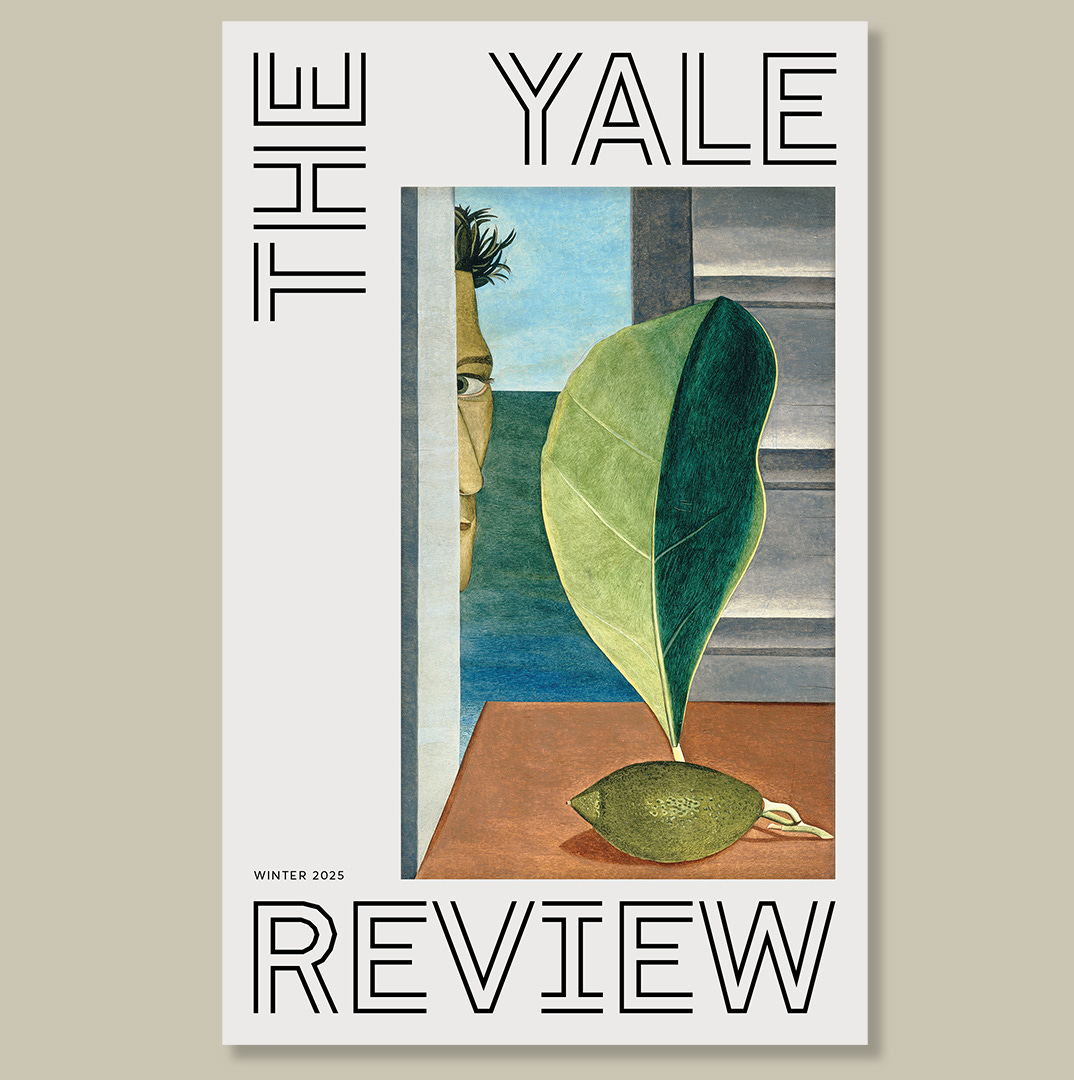
“When Does a Divorce Begin?” appears in our Winter 2025 issue, which is available in print and online now.
Semi related, i just wrote this https://open.substack.com/pub/nimnim1/p/poly-hell
😘