

Behind the Story: Emma Copley Eisenberg
On gender, desire, and coming-of-age at all ages



Emma Copley Eisenberg’s short story, “Lanternfly,” from our Spring 2026 Issue, is literally a beach read: it takes place on the Jersey shore, amid sunbathers and ice cream cones and crab bakes. It’s also a subtle, surprising exploration of art, gender, desire, and coming-of-age at all ages. We spoke with Emma, whose new book, Fat Swim, will be published next month, about her own creative process and how to write about creativity itself.
The Yale Review: The narrator of your story is what we might call literary-adjacent: he’s a librarian who gets a part-time job with a famous writer; he isn’t in an MFA program himself, but he knows a lot of people who are. There’s a lot of fiction, both classic and contemporary, narrated by writers or aspiring writers. What drew you to a character at the edge of the literary world? What perspective on the creative process—and creativity itself—does it give us?
Emma Copley Eisenberg: This story began for me with the image of a young man looking at an older man’s body on the beach. This sense of the narrator, Jules, being the one with the more “desirable” body, but nevertheless the one looking rather than being looked at, felt core to Jules’s character, and the dynamic of someone young and lost watching someone old and solid felt core to the story. I followed these hunches to learn that Jules is looking at Rob not only because he finds Rob’s comfortable way of being in his body interesting, but also because Rob has a way of being comfortable in the world, in the flow of life, that is connected to his identity as a writer and creative person. Jules can’t quite access either kind of ease, which makes sense because he’s young, and also is made more complicated by him being trans and having recently had top surgery.
So I think the sense that Jules is at the edge or adjacent, as you so wonderfully put it, is about both the world of art and labor and the world of the body. To be the assistant to an artist or to create the daily conditions (food, shelter, beauty) for an artist to do their best work is a vital and creative role too, and Jules gets pleasure and fulfillment from sitting at this edge, though I do think he is interested in what it would feel like at the center, which is part of why he wants to know Rob so badly. But artists at the center of creating are not always in the best position to know what is really happening in their art and what it means, right? So often people at the edges are much better at understanding and talking about what it means to be creative. In this story, the body is involved in Rob’s art making too, in ways that Rob understands intuitively but Jules is learning, page by page, to articulate.
One of the characters in your story has just embarked on a new novel, which seems to induce an almost altered state. Among other things, his relationship to his body changes while his mind is at work: he eats very little and has a lot of sex. How do you think about the relationship between creativity and physicality? Is it a kind of appetite?
Hehe, yes: Rob, the famous science fiction author who our main character is assisting, becomes a man on creative fire, sustained by seltzer and orgasms. At this point in my life, I know enough artists to know that absolutely everyone’s creative process is inextricable from their body, and that this relationship looks wildly different for everyone. I know people who have to run or lift weights in order to create and I know people who have to stay in bed and not move for days. I know people who eat pretty much constantly while writing—fruit and nuts and gummy fish and Sour Punch Straws—and people who take Rob’s approach. I pretty much only apply to residencies where I know the food will be good, because spending all day trying to make good art and then getting to eat a delicious and nourishing dinner prepared for you by someone else is the biggest stroke of luck and, I believe, absolutely necessary for the work ahead.
For many years I basically thought that my body was disgusting and a liability to my writing. What if that isn’t true? was a question I started to ask about five years ago. What if my body can sit at the table, come to the party, etc.? I think my writing got a lot better on a craft level and my books found more readers once I began examining and consciously talking to the part of my thinking self that was at total war with my physical self. I wasted a lot of time trying to write sentences about thoughts and feelings alone.
Luminous written insight can totally be accessed without any understanding of physical pleasure, but these are not usually the books I love as a reader, or that end up staying in my house after I’ve read them—I’d much rather spend a sunny morning reading Grace Paley than Ottessa Moshfegh, but that’s just me.
At the same time, some of my favorite writers have a troubled relationship to appetite—to want itself—or they also understand that struggle well. I don’t think the goal is to suppress that struggle or pretend it doesn’t exist, because it’s such a big and interesting part of being human. So many cultural and religious traditions, from Southern evangelical Christianity to bagel Judaism to East Asian beauty culture to Irish and Italian Catholicism and Modern Islam, all contain big doses of “body as disgusting liability,” so it’s no wonder that parts of so many of us believe this.
I think writers who believe in the body as a powerful source of energy and artistic knowledge are best served by being in active communication with the parts of themselves that also believe the body—particularly the fat body, the disabled body, the dark-skinned body, the body with visible scars or burns or skin irregularities—is disgusting and shameful. If these parts are not in communication, the result is often a deepening of the psychic war between brain and body, a passing on of that shame and fear to the reader—like making a shallow groove in the ice deeper and deeper.
I’ve written about this before, and I feel my perspective is sometimes mischaracterized—including in this magazine, in a piece by Garth Greenwell in response to my writing about Miranda July’s All Fours—as rooted in “offense,” or in an impulse toward moral policing. It’s not. When I come across evidence of a writer in unexamined war with their physicality, which often manifests across all POVs in a novel or across a body of work, what I feel is not personal offense but artistic disappointment that the writer’s capacity for imagination and empathy is so severely limited and collective grief that we as a culture are still so far away from understanding the essential link between the body and art making. That these limitations on the part of the writer work in tandem with the ways more powerful bodies tend to dominate how we talk about and see less powerful bodies troubles me also, but that trouble has pretty equal weight as these failures of craft.
“Lanternfly” is about change of so many kinds, on so many scales: aging, transitioning, making art. The titular symbol for all of this is an invasive insect that we’re supposed to kill on sight. How did you arrive at the lanternfly as a central image of transformation for this story?
My spouse is from the Jersey Shore, so my family goes there for a week each summer. One year, the beach was so overrun with spotted lanternflies that they were crawling all over us in the sand and even floated in clumps on the surface of the ocean. It was strange and gross and alarming! But underneath my alarm was another feeling, which was curiosity about these creatures and a kind of awe: So red! So powerful! How had they traveled all the way from China to the Jersey Shore? How potent they must be to earn a murder decree from the state! The contradiction that they were dangerous and gross but also beautiful started to work on me. There are so many things in our world that have no explanation, they just are—a thing that I think both characters in “Lanternfly,” the younger Jules and the older Rob, are struggling against. This is how writing a short story usually starts for me. I’ll start with an image and then ask, For whom would this image be super urgent?
What’s a popular piece of writing advice you don’t agree with? What’s a piece of advice that you stand by?
I’ve become really obsessed with the word plot and I generally disagree with the common understanding of it as action or incident that takes place externally. I don’t look down on plot (fun! immersion! movement!) and I don’t ignore it, I just think that “what is going to happen next” is only one way that plot can work. To me plot is closer to a kind of design or logic, the thing that connects the parts of a story to each other and orders them; the thing that the reader is tracking as it deepens. Most people would say the “plot” of “Lanternfly” is that a young man flailing in his life takes a job assisting a prominent older science fiction writer for a summer and ends up helping him troll the apps for sex, but I’d call that the premise, or the incidents. The plot of the story for me is about a young trans man at odds with his own body and mind becoming less at odds with it via a gradual process of learning how to live and love from someone older; as the days tick by and Rob writes his book and does sex act after sex act, Jules becomes more and more unburdened. There’s a logic there, though I didn’t set out with it and found it only in revision.
I do think that writing around the same time most days, in mostly the same place—a.k.a. a routine—has value. I think the body and the brain start to talk to each other extra hard at whatever time of day and in whatever place you pick, and that a kind of Pavlovian conditioning can happen, like an association getting stronger or a muscle getting more able to bear weight over time. Lately I’ve been writing at dawn, which is of course also when a lot of people pray, and I think this is working because my nighttime brain and my daytime brain are both online at the same time.
“Lanternfly” is drawn from your book Fat Swim, a collection of linked short stories that will be published by Hogarth this April. How would you describe those links? Why did you decide to braid the collection together in this way? Also: how? Tell us a bit about the mechanics of making the different stories connect.
I’ve always been a sucker for books and movies in which people are main characters in one part and side characters in another, in which people are connected in loose but powerful ways. Magnolia, for example, is a perfect film; so is Short Cuts, based on the work of Raymond Carver. Also books like Winesburg, Ohio or The Heart Is a Lonely Hunter, in which the characters live nearby one other and cross paths all the time, in both meaningful and totally mundane ways. Fat Swim takes place in and around Philadelphia, and has characters that recur: someone may be the star of one story and then pop up as an extra in another. Two characters date the same queer fuck boy. That kind of thing.
But I do also see Fat Swim as having a united plot that binds the book together with a singular logic. For me that logic is guided by two questions: (1) Is my body me or not me? (2) Do I get to say what it means, or do other people? These questions get posed in the book’s title story and then the rest of the book is different characters trying to answer them.
In the first third or so of Fat Swim, I think the characters are saying “My body is not me,” because other people are telling them what their body means and they are chafing against that. In the second third, people swing hard the other way, saying “My body is me and I get to decide what it means come hell or high water,” which is an idealistic but often untenable way to live. Sometimes the rubber meets the road, and when it does these characters are often totally destabilized. The last third, which includes “Lanternfly,” contains stories of synthesis, I think—of grief about the parts of being a person with a body that are painful and out of our control or just are, and delight at the knowledge that our bodies can contain what our brains can’t. These final stories are reaching for something more—more life than can be thought or experienced through our five senses, more knowledge than can be accessed by the words thinking or pleasure or pain. At the end of the book, the narrator of the final story asks a new question, which is, I hope, both comforting and unanswerable.
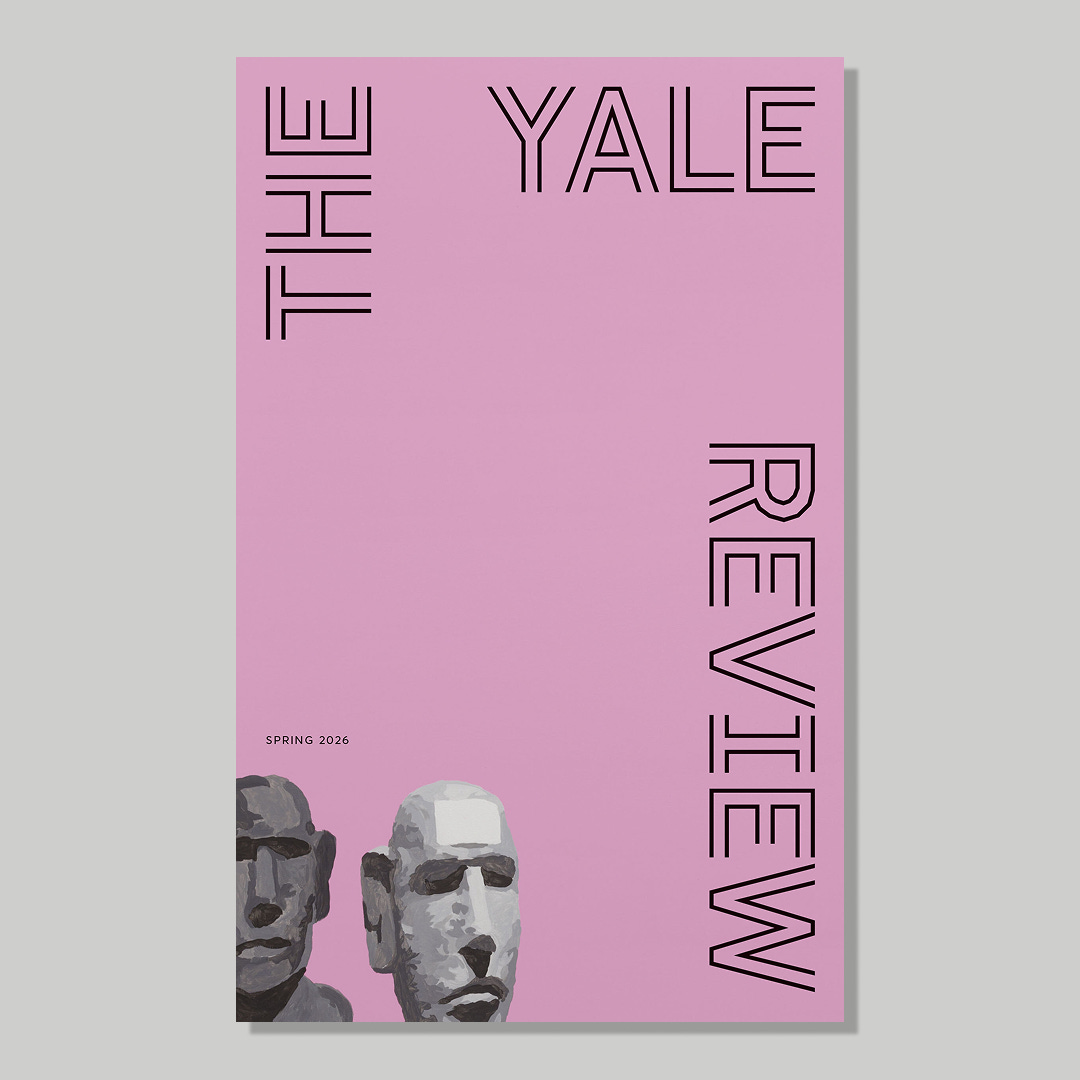
“Lanternfly” appears in our Spring 2026 Issue, which is available online and in print now.
 | A guest post by
|
the phrase "coming-of-age at all ages" is the line that opens this piece up beyond memoir. you refused the idea that sexual and gender identity arrive once and stay fixed. the coming-of-age is ongoing. the body keeps revising its story and the mind keeps catching up.
what struck me is that desire is the one part of identity that resists narrative. it does not follow a character arc. it does not build toward resolution. it moves in contradictions and reversals that make storytelling about it inherently dishonest unless the writer is willing to leave the contradictions unresolved. the writers who do this best are the ones who treat desire not as a theme but as a method - letting the prose itself behave the way wanting behaves. restless. circling. never quite arriving.
the honesty here is in what you did not resolve.